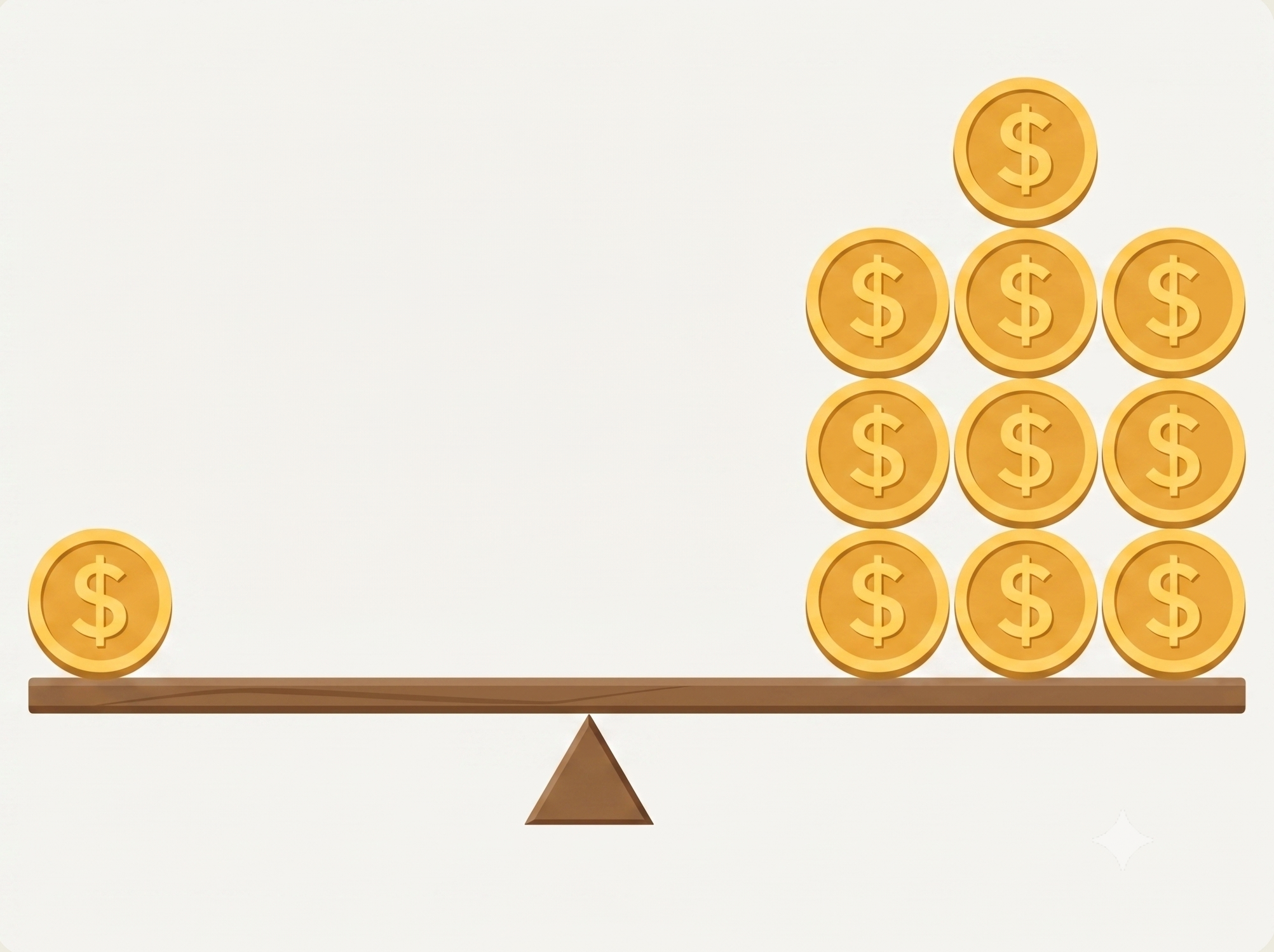
Right before the release of US Non-Farm Payrolls (NFP) or the CPI (Consumer Price Index), do you find yourself counting down the seconds on the clock?
Your emotions get hijacked by wildly thrashing candlesticks, and you frantically mash the buy or sell button.
That is not trading. It is nothing more than a doomed “coin flip (gamble).”
Why is entering the market amidst this frenzy purely an act of self-destruction? We will unravel the structural realities of the market behind the scenes and equip you with the mental framework to quietly wait for your own scenario to play out.
- The “3 Nightmares” Occurring on the Charts During News Releases
- The Wall of HFT: Why Retail Traders Can Never Win the Speed Game
- The Addiction to “Volatility”
- The Reality of Surviving Traders: “Ignore the Noise and Wait for the Scenario”
- The Smartest Collaboration Between “Human Brain” and “System”
- “Waiting” is the True Job of a Trader
- Summary
The “3 Nightmares” Occurring on the Charts During News Releases
The reason touching the market during major economic indicator releases is a devastating act of self-sabotage comes down to the “3 Nightmares” unfolding behind the scenes.
- Spread Widening and Slippage Blocking Last-Minute Entries : Immediately before and after a major event, market liquidity (the supply of orders) evaporates in an instant. As a result, a spread that is normally 0.2 pips can abnormally widen to several dozen pips. Even if you hit the entry button at the exact moment of the release, your order will slip significantly from your target price (slippage), forcing you to hold a massive unrealized loss the moment you enter.
- Whipsaws Reaping Orders in Both Directions : Immediately following a news release, extreme volatility is common—the price might shoot up, only to violently crash back down a few seconds later. They make it look like it’s going up to trap buyers, then fake a crash to trap sellers, mercilessly hunting the positions of retail traders in both directions.
- The Terror of “Holding Through News” Invalidating Your Lifeline (Stop-Loss) : You might think, “If entering right before causes slippage, I’ll just hold a position beforehand.” This is incredibly dangerous. The violent price gaps during a news release can easily jump right over your pre-set stop-loss, executing your order at a far worse price. Your intended risk tolerance (your lifeline) completely fails, and you could blow a massive portion of your account capital in a single instant.
Ad Space 1
The Wall of HFT: Why Retail Traders Can Never Win the Speed Game
You might think, “Can’t I use programming or an EA (Expert Advisor) to place orders in milliseconds?” However, from a technological standpoint, it is impossible for a retail trader to win the speed game during news releases.
Global investment banks and massive hedge funds utilize HFT (High-Frequency Trading).
- They Are the Only Ones Rejoicing in the Volatility : These institutions invest billions of dollars into massive infrastructure, placing their servers right next to the exchange to execute thousands of ultra-high-speed trades per second. The violent volatility that terrifies retail traders is the perfect feast for HFT algorithms to systematically scalp tiny price increments in fractions of a second. They are the only ones celebrating in this frenzied market.
- You Will Lose the Short-Term Speed Game 100% of the Time : Against HFTs armed with massive capital and dedicated network lines, competing with manual entries, or even retail-level programming and EAs, is futile. You will be defeated by communication lag (latency) and transaction costs (commissions and spreads).
Simply trying to step into the same arena as them for a “speed game” during news releases is a fundamental mistake.
Ad Space 2
The Addiction to “Volatility”
So why can’t so many people quit this highly dangerous news trading?
The reason is that the human brain is hardwired to release pleasure chemicals (dopamine) when witnessing “violent price movements (volatility).”
When you see a screen where thousands of dollars move in a flash, your brain enters the exact same state of arousal as it does in a casino. Driven by an intense FOMO (Fear Of Missing Out)—”If I don’t get in now, I’ll miss my chance”—your rationality gets paralyzed, and you repeatedly execute baseless gamble entries.
You might occasionally hit a big win by pure luck. However, without a structural edge (positive expected value), the reproducibility is zero. A gambling addict who has had a taste of victory will eventually blow their entire net worth in a single “reckless rampage.”
Ad Space 3
The Reality of Surviving Traders: “Ignore the Noise and Wait for the Scenario”
What action do the real traders who survive in this market take the moment an economic indicator is released?
The answer is remarkably simple: “They take their fingers off the entry button and simply watch.”
Calmly Wait for the Noise to Pass
The wild price swings during news releases are just “chaotic noise (a storm).” No fool sets sail on the open ocean right in the middle of a raging storm. You either close your positions beforehand to avoid the risk, or you calmly watch as your existing position rapidly approaches its take-profit target, waiting for the storm to pass.
Let the Price Come to Your Pre-Drawn “Key Levels”
The violent movements of news releases act as an accelerator, rapidly pushing the price toward the horizontal lines or price zones you have already mapped out in your market context. You calmly observe whether the price reaches your target levels, not just for entry timing, but also for your pre-determined take-profit targets.
Ad Space 4
The Smartest Collaboration Between “Human Brain” and “System”
The market’s volatility and environment slowly shift depending on the year and era. Rather than struggling to mechanically replicate everything with complex programming and EAs, it is far less costly and labor-intensive to rely on the human brain to adapt flexibly. Unless you are exceptionally passionate about programming, there is no need to allocate unnecessary resources there.
The true place for a retail trader to utilize a system (automated orders) is not in ultra-short-term speed battles or complex automated trading.
- What the Human Brain Should Do : Analyze the market environment on a relaxed timeframe and draw a scenario where the price pulls back to major key levels (flexible, adaptive judgment).
- What the System Should Do : The automated execution of orders, such as Limit orders, Take-Profits, and Stop-Losses (OCO orders).
Leave the speed game to the HFTs. Humans should dedicate their brain resources to what they do best: “Understanding market context and environments.” Entrusting only the execution of orders to the system (limit orders) is the most efficient and smart way for a retail trader to survive and win.
“Waiting” is the True Job of a Trader
Trading is not about mashing buttons while staring at a screen. It is about sitting completely still, waiting for the “perfect setup”—where your edge truly exists—to come to you.
“The time spent quietly monitoring your scenario without touching violent price movements.” This is, in fact, the most valuable and highest-paying time for a trader.
Stop throwing yourself into the noise and self-destructing. Wait for the storm to pass, and smartly execute only your planned scenarios on a chart that has regained its calm.
Summary
- News trading is gambling. Between spread widening, chaotic whipsaws, and the risk of holding positions that invalidate your stop-loss, you have zero mathematical chance of winning.
- The only ones rejoicing in wild volatility are foreign investment banks and huge hedge funds using HFT. Fix the bug in your brain that craves stimulation, and avoid becoming their bait.
- Leave complex programming to the hobbyists. As a retail trader, use your “human brain” for market context and adaptive judgment, and leave only the execution (Limit/OCO orders) to the system.
Ad Space 5
Comments