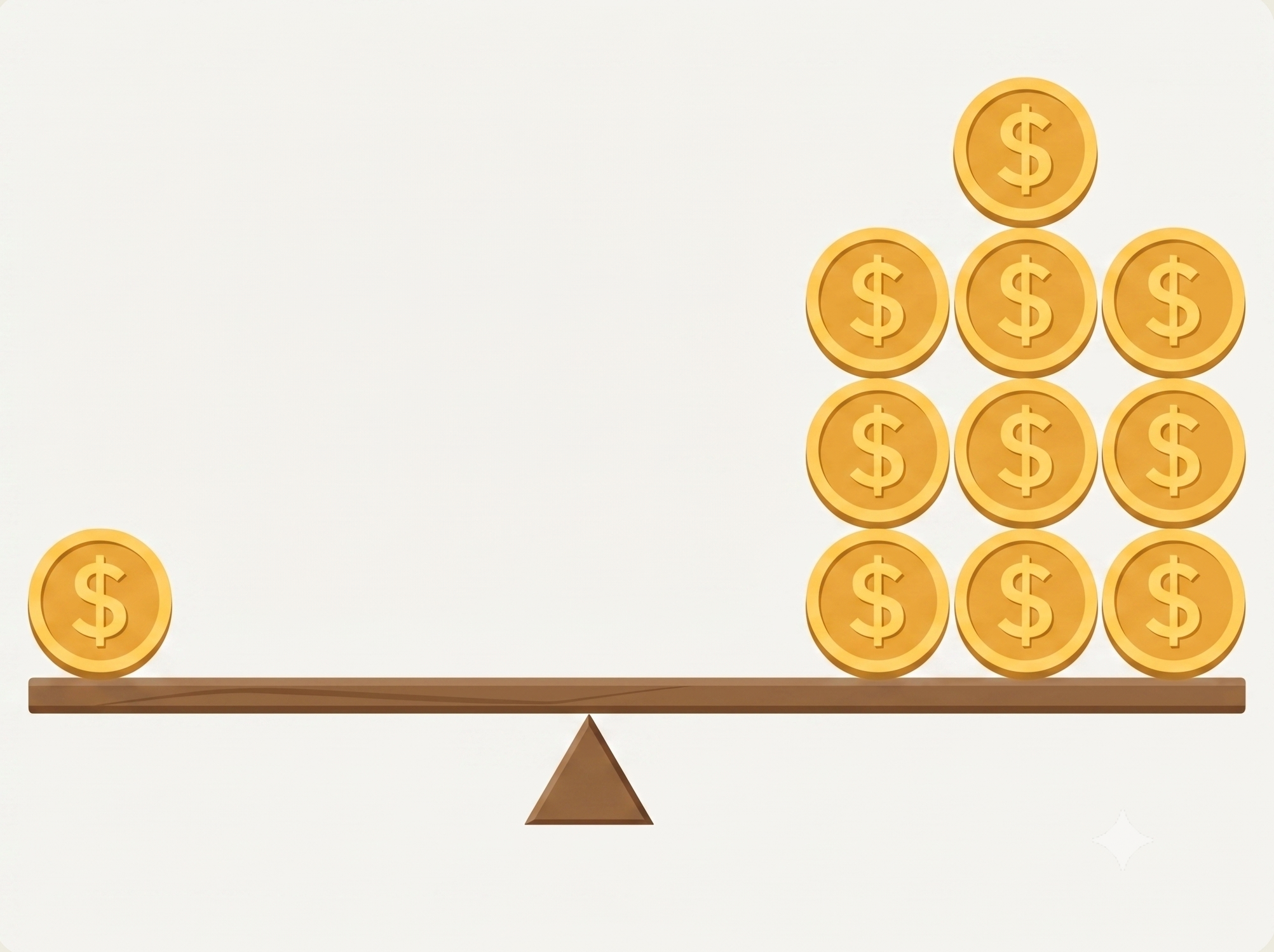
“Zero Trading Commissions!”
You often see this phrase in enticing advertisements from brokerage firms.
If you’re thinking, “If there are no commissions, it doesn’t matter where I trade,” you need to take a moment to stop and understand how the system actually works.
In the world of finance, no company provides services for free.
Behind the “no fees” claim lies an “effective cost” that is certainly recouped, albeit in ways that aren’t immediately obvious.
In this article, we’ll walk through the mechanics of the “spread” (the true nature of these costs) and provide a step-by-step guide on how to choose a broker wisely, specifically for investors who trade using their smartphones.
The Truth Behind “Zero Fees”: The Spread IS Your Real Cost
Where do “fee-free” brokers actually make their money? The answer is simple: the spread.
The spread is simply the difference between the buying price (Ask) and the selling price (Bid).
For example, when you open your mobile trading app, you’ve likely seen USD/JPY listed like this:
- Buy (Ask): 150.002 JPY
- Sell (Bid): 150.000 JPY
That difference of 0.002 JPY (0.2 pips) is the spread.
The moment you open a position, your unrealized profit/loss starts slightly in the negative. That’s because this spread (your real trading cost) has already been deducted upfront.
On a single trade, it might only seem like a fraction of a cent. But as you execute trade after trade, these costs quietly compound over time.
It’s like paying an entrance fee every single time you step into a shop.
[Ad Space 1]
The Hidden Costs You Might Be Missing
Trading costs aren’t limited to the visible spread displayed on your screen. The hidden costs you really need to guard against include:
- Spread Widening (The Reality Behind “Fixed Spreads”):Many brokers advertise “fixed spreads,” but during periods of low market liquidity, such as early morning hours or immediately following major economic announcements, spreads can widen dramatically.
- Execution Speed & Slippage (The Invisible Loss):Whether your order gets filled instantly at your target price is critical. If your trade gets filled at a price slightly worse than where you clicked (known as slippage), you are paying an extra hidden cost, no matter how tight the advertised spread is.
While bad-faith brokers do exist overseas, these phenomena are usually not caused by broker malice, but rather by the structural reality of the market. What matters is understanding how these mechanisms work and taking proactive steps, such as avoiding trading during high-risk hours, to protect yourself from unnecessary costs.
[Ad Space 2]
Two Key Criteria for Choosing the Right Broker
As advertised standard spreads become nearly identical across top brokers, how should you choose where to open your account? Smart capital management comes down to two essential criteria:
- Tight Spreads × High Execution Quality (Low Standard Cost + Zero Price Drift):A tight standard spread is a baseline requirement, but bulletproof execution quality, where orders fill instantly without slipping when you hit the button, is paramount. Market volatility will widen spreads naturally, but if your orders slip excessively or the system glitches, a narrow spread means nothing. Choose a broker that combines tight spreads with fast execution to minimize your true overall costs.
- Mobile App Usability & Economic Indicator Visibility:On a small smartphone screen, can you intuitively check upcoming high-impact economic news, monitor your open positions, and check your P/L at a glance? Eliminating operational friction and wasted steps is essential for executing trades smoothly.
Two Traps You Should Actively Avoid
When selecting a broker, there are shiny distractions you should consciously ignore:
- An Endless List of Exotic Currency Pairs :You don’t need access to dozens of exotic currency pairs like the Turkish Lira or South African Rand. What matters most is whether the broker offers ultra-tight spreads and high liquidity on major pairs (such as USD/JPY or EUR/USD).
- Flashy Cash-Back Bonuses and Promotional Campaigns :Don’t fall for one-off marketing lures like “Get $100 upon opening an account!” What truly impacts your bottom line over hundreds of trades isn’t a one-time signup bonus, but the daily trading costs (spreads and execution performance) you pay on every single order.
Summary
- The reality of “zero fees” is the spread. True risk management begins by accounting for hidden costs like spread widening and slippage.
- Don’t be swayed by surface numbers or temporary promos. Evaluate brokers based on total execution quality, app usability, and overall practical costs.
Understanding the underlying mechanics and eliminating unnecessary costs is the most solid first step toward staying in control of the game for the long term.
[Ad Space 3]
Comments